
Water heater types
Water heater sales, rentals and installs across Ottawa · Nepean · Kanata · Stittsville · Barrhaven · Orleans · Gloucester · Manotick · Greely · Richmond · Carp · Kemptville · Rockland — from our shop at 36 Capital Drive, Nepean.
There are many makes and models and it gets confusing fast. Every one of these rents or sells, and every one is installed by our own licensed technicians. Not sure what’s in your basement? Send a photo and we’ll tell you. Switching from electric or chimney-vent to another type, or moving the tank, involves extra venting or gas work — we assess it and give you the price in writing before we start.
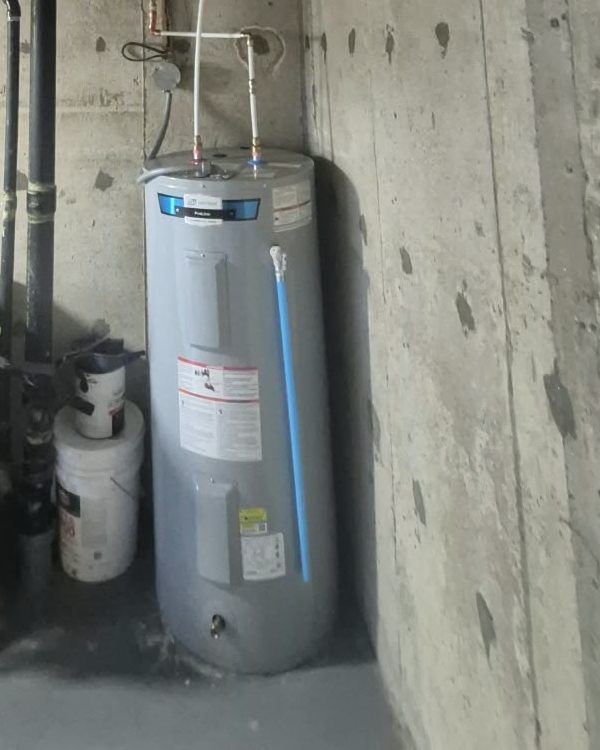
No gas, no vent — just a 240-volt connection. The lowest rental rate and the simplest install. Heats and recovers more slowly than gas, so electric homes usually go one size up. The answer for streets without natural gas and for many condos.
Rent or buy · 40 and 60 gallon
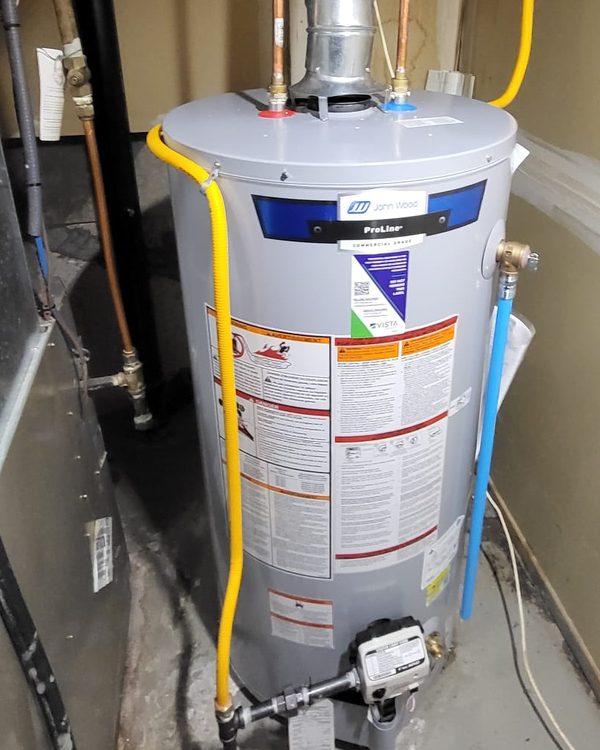
The classic natural gas tank. Hot exhaust rises on its own up a metal flue into the chimney. Inexpensive and dependable where a lined chimney exists; being replaced over time by power-vent models that don’t need one.
Rent or buy · 40 and 50 gallon
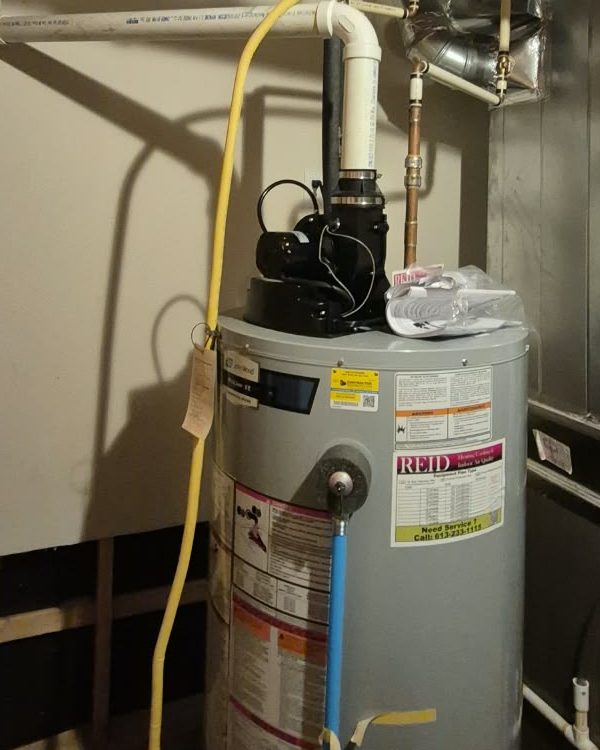
Natural gas with a small fan on top that pushes exhaust out through white plastic pipe to a side wall. No chimney needed, better efficiency, and it can go almost anywhere in the basement. The tank most Ottawa homes get today.
Rent or buy · 40, 50 and 60 gallon
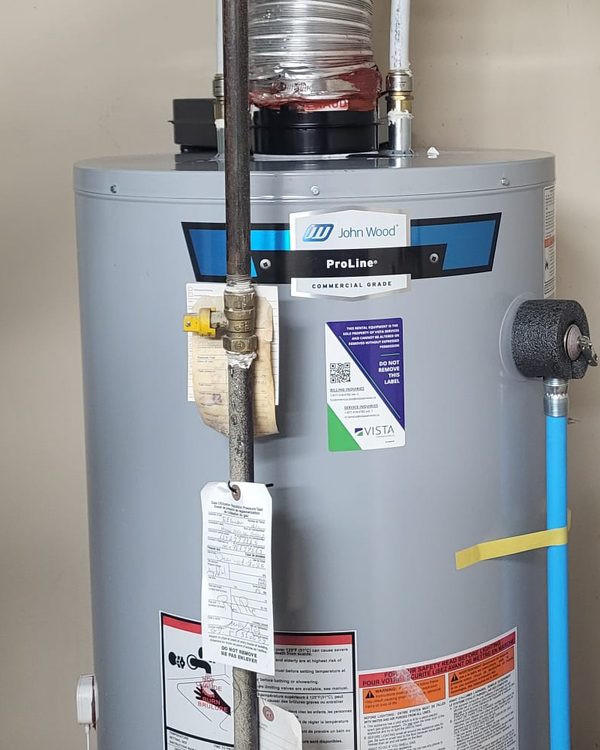
Natural gas with a sealed vent that goes straight through the outside wall — no fan, no chimney, no electricity for venting. A good fit when the tank sits against an exterior wall and you want the quiet of no blower.
Rent or buy · 40 and 50 gallon
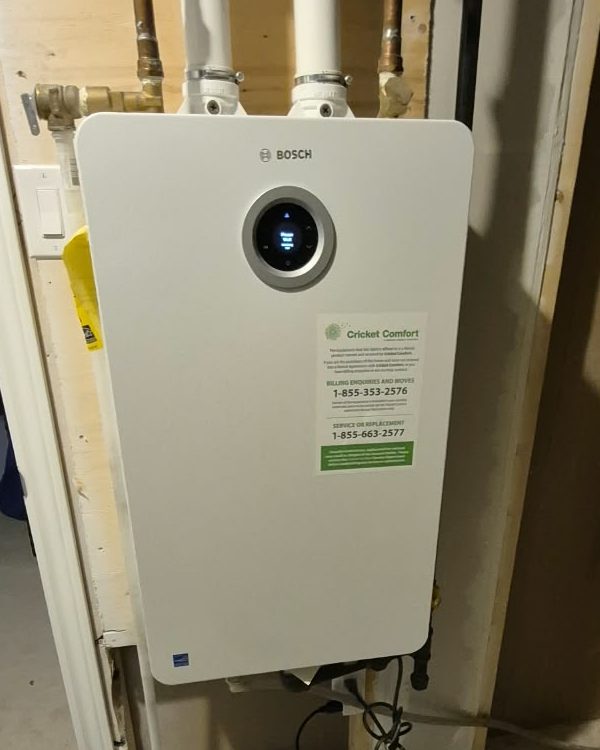
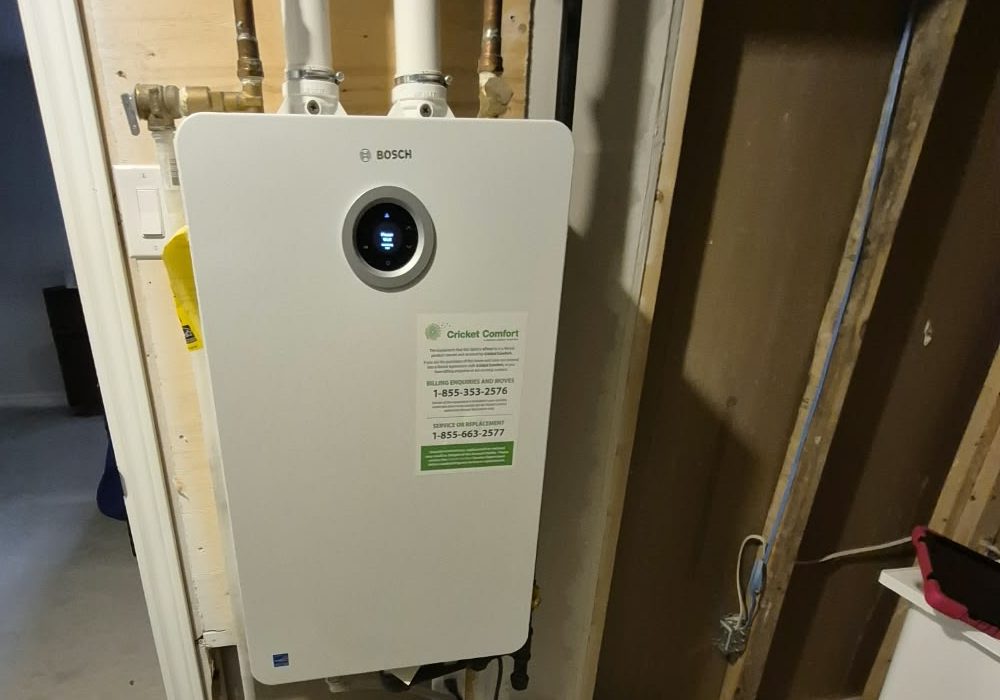
A wall-mounted unit that heats water as it flows, so you never run out and never pay to keep a tank warm. Needs adequate gas supply and a vent to the outside; we assess both and give you the replacement details up front. Takes up almost no floor space.
Rent or buy · Bosch and other makes
Carbon monoxide safety
A conventional water heater relies on hot exhaust rising up the flue and chimney on its own — no fan, no sealed pipe. When that path is blocked, corroded or badly connected, the exhaust spills back into the basement, and it carries carbon monoxide: colourless, odourless, and the reason Ontario now requires a CO alarm on every storey of any home with a gas appliance. These two photos are from Ottawa basements we service.
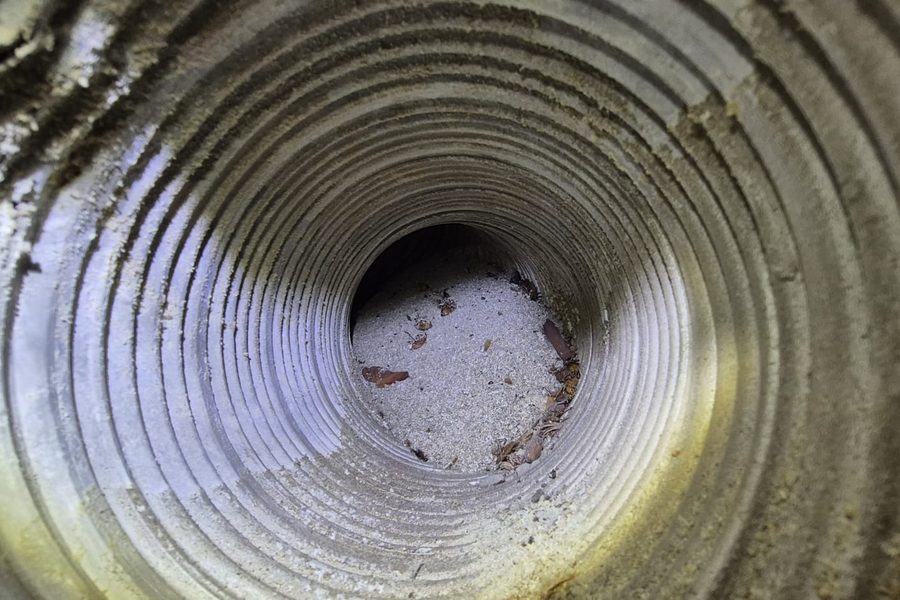
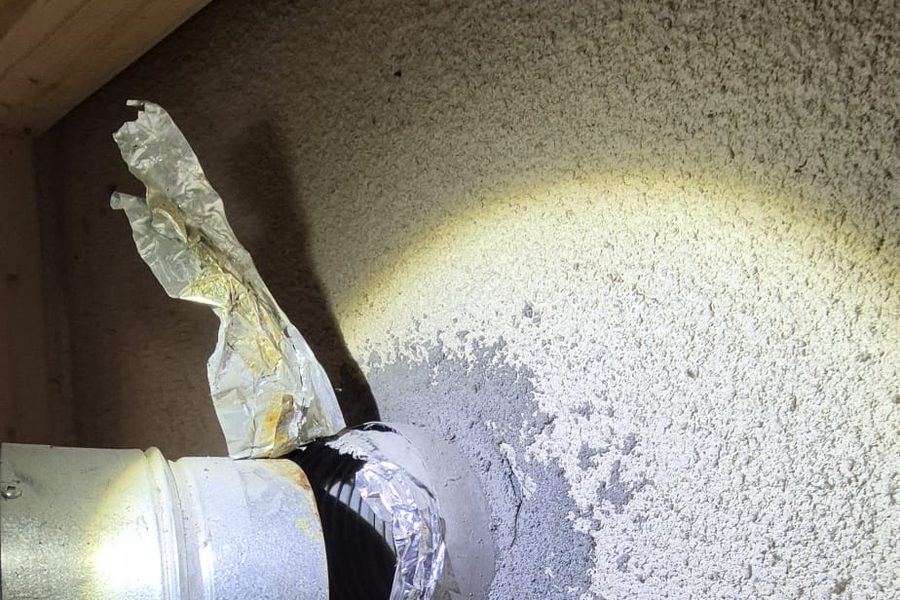
Draft at the hood, flue pitch and joints, the chimney connection and liner, spillage with the furnace running, and the CO reading at the tank.
Ontario’s Fire Code requires a working CO alarm outside every sleeping area and on every storey of a home with a gas furnace, water heater or fireplace. Alarms detect CO — they don’t prevent it.
Where a chimney is tired, a power-vent or direct-vent tank removes the chimney from the equation entirely. We quote the venting change up front.
Headache, dizziness or nausea that clears when you leave the house, a CO alarm sounding, or soot and rust around the top of the tank: get everyone outside, call 911, and don’t go back in until it’s cleared. Then call us.
Look at the top of the tank. A metal pipe going up to a chimney is conventional. A box with a fan and white plastic pipe out the wall is power vent. A short metal vent straight out the wall with no fan is direct vent. No vent at all, just wires, is electric. A box on the wall with no tank is tankless.
Yes, when the venting is right and checked yearly. The risk is carbon monoxide: if the flue is blocked, corroded or badly connected to the chimney, exhaust spills back into the basement. Have the venting inspected every year by a licensed technician, keep a working CO alarm on every storey (Ontario law since January 1, 2026), and if the chimney is tired, consider a power-vent or direct-vent tank that doesn't use it at all.
Yes. They're still made and still installed where a good chimney exists, but they're slowly being replaced by power-vent models that don't need a chimney and waste less heat. If you're replacing a chimney tank we'll tell you whether switching makes sense.
Yes. We assess the gas line and venting first — some homes need a larger line, many don't — and give you the replacement details in writing before we start. Tankless suits homes with steady gas supply and a spot on an outside wall; if you have hard well water we'll talk about a filter first.
A 40-gallon gas tank handles most families of three or four; a 50-gallon is the safe choice for five or more, big tubs or two showers at once. Electric homes usually go one size up because the recovery is slower. We'll size it when we quote.
Yes, for homes outside the natural gas network — Carp, Dunrobin, Kars, North Gower and the rural ring. Propane tanks rent or sell the same way.
Send a photo of the top of the tank with your quote request. We’ll tell you what it is and what to replace it with.

Contact