
Maintenance
Water heater maintenance across Ottawa · Nepean · Kanata · Stittsville · Barrhaven · Orleans · Gloucester · Manotick · Greely · Richmond · Carp · Kemptville · Rockland — from our shop at 36 Capital Drive, Nepean.
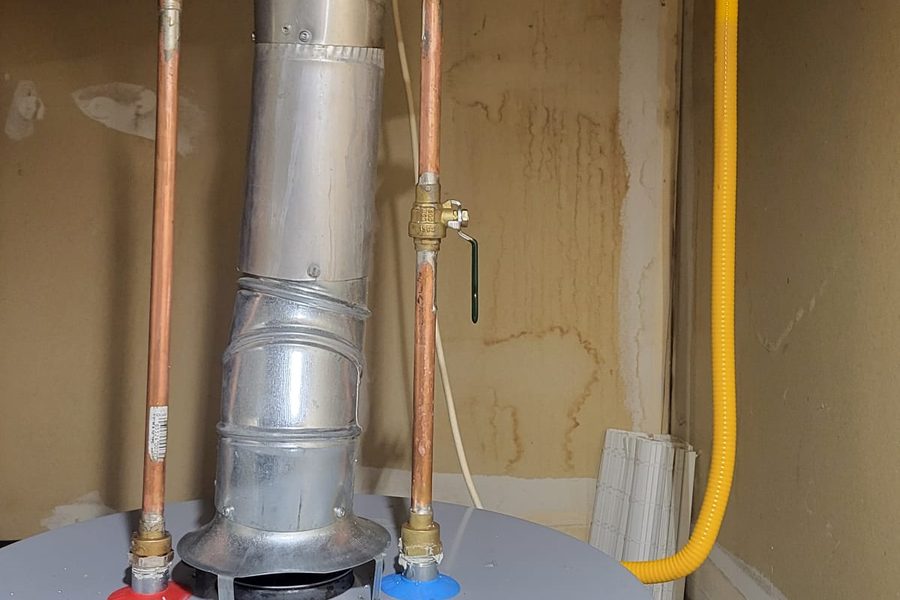
Every water heater collects sediment and scale. Left alone it insulates the burner from the water (higher gas bills), bakes onto the bottom of the tank (that rumbling sound), and eats through the steel — which is how a fifteen-year tank becomes an eight-year tank. Suggested for every heater; required by some manufacturers to keep the warranty.
Why bother
Sediment on the bottom of a gas tank sits between the burner and the water, so the burner runs longer. On an electric tank it buries the lower element. On a tankless, scale in the heat exchanger throttles flow and the burner works harder for less hot water.
A flushed tank with a live anode rod routinely runs past fifteen years. A neglected one rusts through the bottom — and the first sign is water on the floor.
Bradford White, Rheem, A.O. Smith/John Wood, Bosch, Rinnai, Navien and Noritz all reference periodic flushing, descaling and anode inspection in their warranty terms. When a tank or heat exchanger fails, the manufacturer can ask for service records. Rinnai requires documented annual descaling to keep its heat-exchanger warranty.
Most “no hot water” calls on tanks under ten years old trace back to sediment, a spent anode or a blocked tankless inlet filter — all things a yearly visit catches.
Tank-type heaters · homeowner can do it
Same procedure for all four — only the shut-off step changes. Twenty minutes, a garden hose, and a floor drain or a bucket.
Gas tank: turn the gas control to Pilot or Vacation (power-vent: also unplug it). Electric: switch off the double breaker — running a dry element burns it out in seconds.
The valve on the cold pipe into the top of the tank.
Bottom of the tank. Run it to a floor drain or outside, lower than the tank. Water will be hot — keep kids and pets clear.
Any hot faucet. It lets air in so the tank can drain.
Until the water runs clear. If it’s milky or gritty, close the drain, open the cold supply for thirty seconds to stir the bottom, and drain again. Repeat until clear.
Close the drain valve, remove the hose, open the cold supply and wait until the upstairs tap runs steady with no air. Only then turn the gas control back to On (relight the pilot if needed) or flip the breaker back on.
A plastic drain valve that hasn’t been opened in years can stick or drip afterward. If it does, or if you’re not comfortable with the gas or breaker step, book us — we replace the valve with brass while we’re there.
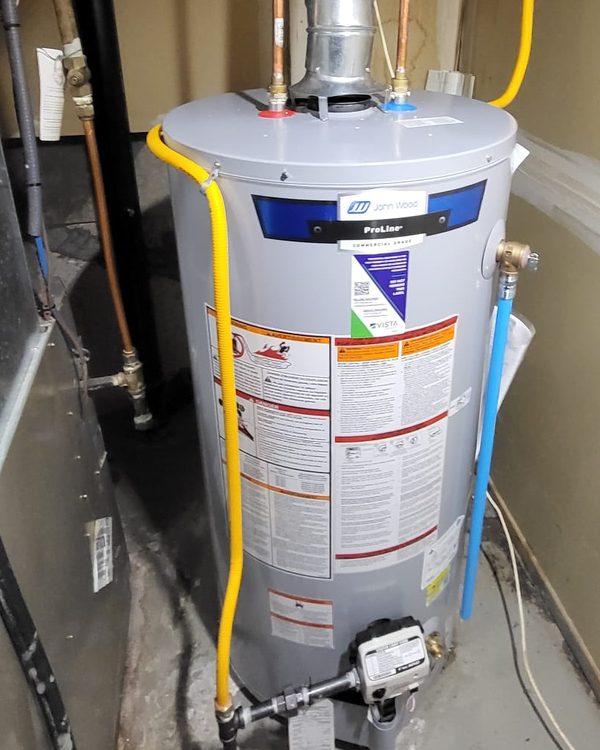
The lever valve on the side or top. Lift it for two seconds with a bucket under the discharge pipe; it should blow and reseat. If it drips afterward or never opened, it needs replacing — it’s the tank’s safety valve.
Pull the rod from the top of the tank; if it’s down to bare wire, replace it. Needs a breaker bar and the tank partly drained, so most people have us do it during the flush. Sooner on well or softened water.
Hot enough to be safe, low enough to slow scale and save gas. Higher settings scald and shorten tank life.
Draft, joints and the chimney connection — see CO safety. Keep the outside vent on power-vent and direct-vent tanks clear of snow and nests.
Tankless · have a professional do it
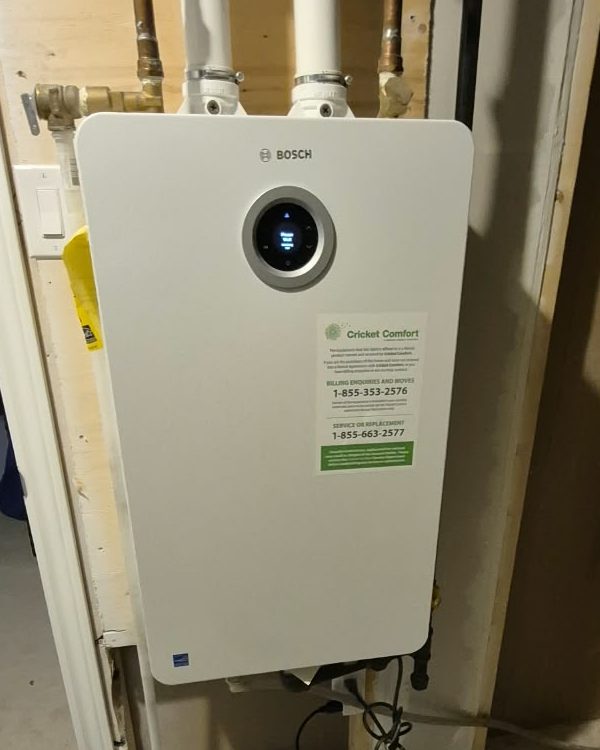
A tankless heats water in a narrow heat exchanger, so scale builds where it does the most damage. Descaling once a year is what keeps the unit at its rated efficiency and its heat-exchanger warranty intact — Rinnai requires documented annual service; Bosch, Navien and Noritz reference it in their warranty terms. On a well or very hard water, every six months.
What the visit involves: close the isolation valves, connect a circulation pump and hoses to the service ports, circulate an approved food-safe descaling solution through the heat exchanger for 45–60 minutes, rinse, clean the cold-water inlet filter and air-intake screen, check the vent and condensate line, read the error-code history, and check gas pressure and the flame. You get a dated service record for the warranty file.
Why a pro: it needs the pump and the right solution, the unit has to be isolated correctly, and skipping the checks around the flush is what leads to the error codes six months later. The visit is a paid service — call 613-233-1115 for today’s price.
Renting?
Vista’s agreement covers repairs to the equipment, not routine maintenance, and damage from sediment or poor water quality is excluded — same as every rental company. A yearly flush (and a descale on tankless) is a paid visit whether you rent or own, and it’s what keeps a future warranty claim from being questioned. On a well, ask us about a softener or filter; it’s often cheaper than the tanks it saves.
Book maintenance directly with us at 613-233-1115 — it doesn’t go through Vista’s dispatch. Same-visit bundle with a furnace or AC tune-up from Reid Heating & Cooling costs less.
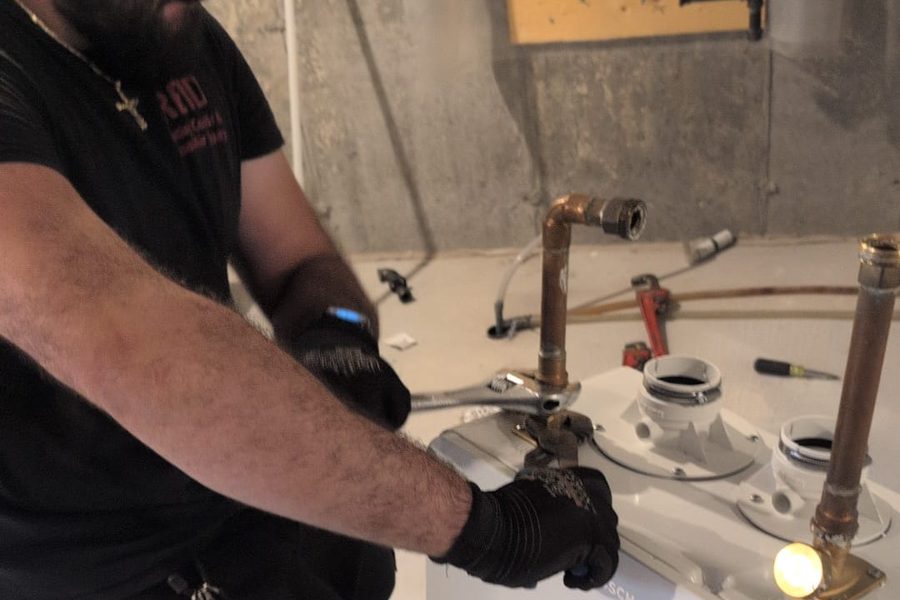
Once a year for most Ottawa homes on city water. On a well, or if you hear rumbling and popping from the tank, every six months. The point is to get the sediment out before it bakes onto the bottom of the tank.
A conventional, power-vent, direct-vent or electric tank — yes, most homeowners can, with a garden hose and twenty minutes. The steps are on this page. If you're not comfortable shutting off gas or a breaker, or the drain valve is plastic and hasn't been opened in years, have us do it.
We recommend a professional. It needs isolation valves, a circulation pump, the right descaling solution and an hour of circulation, plus the inlet filter, vent and error-code history checked. Several manufacturers require documented annual service to keep the heat-exchanger warranty — Rinnai says so explicitly — so you want a service record from a licensed technician.
No. Rental agreements cover repairs to the equipment, not routine maintenance, and damage from sediment or poor water quality is a standard exclusion. Maintenance is a paid service whether you rent or own — and it's the cheapest way to make sure a warranty claim isn't turned down later.
Call us for today's price — a tank flush and check is a short visit; a tankless descale is a longer one. Bundle it with a furnace or AC tune-up from Reid Heating & Cooling on the same trip and it costs less.
A sacrificial metal rod inside the tank that corrodes so the steel tank doesn't. Once it's used up — typically three to five years, sooner on softened or well water — the tank starts rusting from the inside. Replacing it is the single biggest thing you can do to make a tank last.
A flush, a T&P test and an anode check for tanks; a full descale for tankless. Dated service record included.

Contact